The Anatomy of a Botnet: History, Architecture, and the Botnet Economy
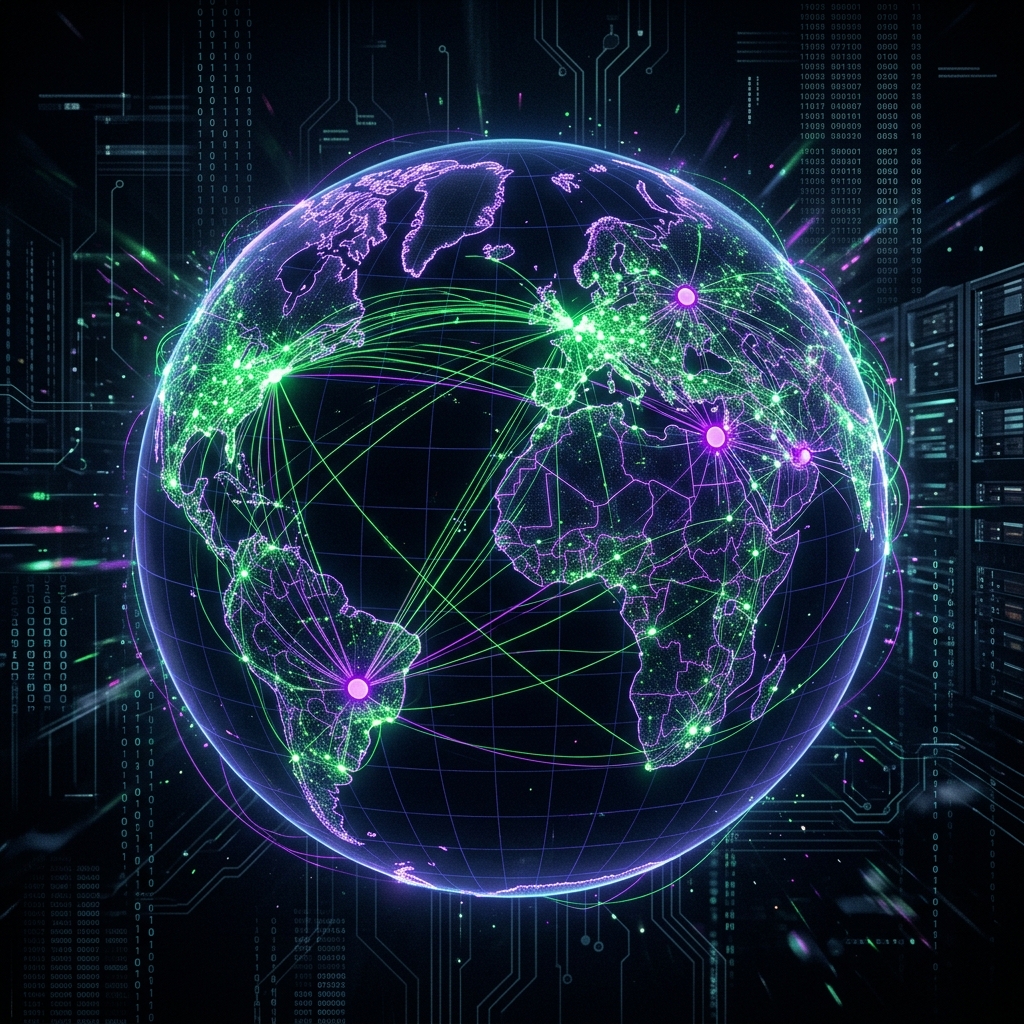
A single compromised machine is a liability. A hundred thousand compromised machines, all executing malicious instructions in perfect synchronization, is a global threat. This is the essence of a botnet (a portmanteau of "robot network").
Whether you are a blue teamer analyzing network anomalies or an offensive engineer modeling adversary behaviors, understanding the history, architecture, and mechanics of botnets is mandatory. What began as a harmless mechanism for managing chat rooms has evolved into the cornerstone of the modern cybercrime economy.
In this deep dive, we will dissect the anatomy of botnets—tracing their lineage from the late 1980s to the devastating IoT botnets of the modern era.
1. The Origin Story: IRC Automation (Late 1980s – 1990s)
The concept of a "bot" predates the World Wide Web and was born entirely out of convenience.
In 1988, Jarkko Oikarinen created Internet Relay Chat (IRC). As IRC networks grew, administrators needed ways to manage channels, keep them open when human operators were offline, and automatically kick abusive users. To solve this, developers created scripts to act as "virtual individuals." Early examples like Puppe and Eggdrop (released in 1993) were completely benign. They joined channels, listened for specific commands from their masters, and executed administrative actions.
However, threat actors quickly realized that the concept of an IRC bot—a remote agent listening to a central command channel—could be weaponized. If you could secretly install an IRC bot on someone else's machine, you could control that machine remotely.
By the late 1990s, the first malicious "zombies" were born. Early remote access trojans (RATs) and worms like Sub7 and Pretty Park (1999) began using IRC as a covert communication channel, allowing attackers to gather system information or launch rudimentary attacks.
2. The Professionalization Era (Early 2000s)
As internet connectivity shifted from dial-up to always-on broadband, the potential scale of botnets exploded. The motivations shifted from "script kiddie" pranks to highly lucrative, organized cybercrime.
The Spam Kings
In 2001, an ISP named EarthLink exposed one of the first massive spam botnets, operated by the notorious spammer Khan C. Smith. This network alone accounted for an estimated 25% of all global spam at the time. By renting out the botnet to aggressive marketing agencies, operators could generate millions of dollars, establishing the first true commercial use-case for infected networks.
Financial Fraud: The Reign of Zeus (2007)
As the decade progressed, botnets became highly specialized. Zeus (Zbot), discovered in 2007, fundamentally changed the landscape. Instead of just sending spam or launching DDoS attacks, Zeus was a banking trojan designed to quietly steal credentials via form grabbing and keystroke logging.
Zeus was not just malware; it was a comprehensive toolkit. Criminals could purchase the Zeus builder on underground forums and easily construct their own bespoke botnets.
3. Architectural Evolution: Evading the Takedown
As law enforcement and security vendors began actively hunting botnets, the operators were forced into an architectural arms race. The evolution of Command and Control (C2/C&C) infrastructure reflects this struggle.
Phase 1: Centralized Architecture (Client-Server)
Early botnets used a strict Client-Server model (often IRC or HTTP). All infected "zombie" machines would phone home to a single, hardcoded IP address or domain name to receive their instructions.
- The Flaw: Single Point of Failure (SPOF). If the FBI or Microsoft Digital Crimes Unit seized the server or took down the domain via the registrar, the entire botnet was instantly neutralized. The zombies were left stranded, unable to receive new commands.
Phase 2: Decentralized Architecture (Peer-to-Peer / P2P)
To solve the SPOF problem, botnet authors adopted Peer-to-Peer architectures, taking inspiration from file-sharing networks like BitTorrent and Gnutella. Botnets like Storm (2007) and Zeus P2P (Gameover Zeus) abandoned central servers.
- The Mechanics: In a P2P botnet, every infected machine acts as both a client and a server. Machines maintain a dynamic routing table of their neighbors. The "botmaster" can inject a digitally signed command into any node, and that command propagates exponentially through the network.
- The Advantage: There is no central server to take down. To kill a P2P botnet, defenders must map the entire network and simultaneously sinkhole the majority of the nodes—an incredibly difficult, highly coordinated engineering challenge.
Evasion Techniques: Fast Flux and DGA
For botnets that still rely on centralized servers or hybrid models, operators use advanced DNS tricks to stay alive:
- Fast Flux DNS: The domain name of the C2 server resolves to a constantly changing list of IP addresses (often other compromised machines acting as proxies). A DNS lookup for
malicious-c2.commight yield an IP in Russia right now, and an IP in Brazil five minutes later. - Domain Generation Algorithms (DGA): Instead of hardcoding a C2 domain, the malware contains an algorithm (seeded by the current date or trending Twitter topics) that generates thousands of potential domain names every day (e.g.,
ajxkqiwnvz.com). The botmaster only needs to register one of those generated domains to regain control of the network. Defending against DGA requires reverse-engineering the algorithm and pre-registering or blackholing the domains before the attacker does.
4. The IoT Explosion & Modern Era (2010s - Present)
The proliferation of "smart" devices—routers, IP cameras, DVRs, and smart appliances—created a new paradigm. These Internet of Things (IoT) devices were frequently deployed with internet-facing management ports (Telnet/SSH) and factory default credentials (e.g., admin/admin, root/12345).
The Mirai Turning Point (2016)
In the fall of 2016, the Mirai botnet achieved terrifying scale by exclusively targeting IoT devices. Rather than relying on complex exploits, Mirai simply scanned the IPv4 space for open Telnet ports and attempted to log in using a hardcoded list of 62 common default usernames and passwords.
Mirai amassed hundreds of thousands of devices and launched unprecedented, record-breaking DDoS attacks. The most famous was the attack against Dyn (a major DNS provider), which resulted in localized outages for massive platforms including Twitter, Netflix, Reddit, and GitHub.
Shortly after the attacks, the author of Mirai (operating under the pseudonym "Anna-senpai") published the source code on Hack Forums. This triggered an explosion of Mirai variants (like Satori and Moobot), fundamentally changing the DDoS landscape.
Botnet-as-a-Service (BaaS) and Modular Malware
Modern botnets are highly modular and segmented. Botnets like Emotet, Trickbot, and Qakbot originally started as banking trojans but evolved into sophisticated malware delivery platforms.
Today's cybercrime ecosystem operates on a "Botnet-as-a-Service" model: 1. Initial Access Brokers (IABs): Operators of botnets like Emotet specialize in gaining initial access to enterprise networks via massive phishing campaigns. 2. The Handoff: Once a foothold is established, the botnet operators rent out or sell that access to Ransomware-as-a-Service (RaaS) affiliates (such as Conti or Ryuk). 3. The Execution: The ransomware operators then drop their payload via the botnet's established C2 channel, resulting in a devastating, multi-stage extortion attack.
5. Recommended Resources & Pop Culture
To truly grasp the culture, the scale, and the dramatic takedowns of these botnets, I highly recommend stepping away from the whitepapers and listening to how these stories unfolded in the real world.
Podcast Recommendations:
-
Darknet Diaries: Jack Rhysider's storytelling is unmatched.
- Episode 27: Chartbreakers (Details how botnets and click-farms are used to manipulate music charts).
- Episode 61: Sam the F (A deep dive into the Satori botnet, a Mirai variant).
- Episode 11: The Jester (Explores hacktivism and botnet usage).
-
Malicious Life: Hosted by Cybereason's Ran Levi, this podcast offers fantastic, historically accurate deep dives. Their episodes on the Conficker worm and the history of spam are essential listening.
6. Defending the Network
Botnets are relentless, but their participation relies on established C2 communication. From an enterprise defense standpoint, preventing a machine from becoming a zombie requires defense-in-depth:
- Egress Filtering: Never allow workstations or servers to initiate outbound connections on arbitrary ports (especially IRC, Telnet, or unusual high ports) directly to the internet. Force all traffic through an inspected web proxy.
- DNS Sinkholing & Threat Intelligence: Ingest threat intelligence feeds (like Abuse.ch) into your DNS infrastructure to actively block resolution to known DGA domains and C2 IPs.
- IoT Segmentation: Never place IoT devices (printers, smart TVs, cameras) on the same VLAN as your corporate workstations or servers. Deny internet access to IoT devices unless absolutely required for functionality.
- Behavioral Detection Engineering: Traditional Antivirus is ineffective against modern modular botnets. Rely on EDR (Endpoint Detection and Response) solutions that flag anomalous behaviors, such as
powershell.exelaunching from an Office document, or a process communicating with rare, newly registered domains.
Defense informs offense. Offense informs defense.